The Philosophy Behind Living Pages
Charlotte Mason Philosophy
A nineteenth-century educator whose ideas about how children learn remain as fresh and powerful today as when she first wrote them down.
Who Was Charlotte Mason?
Charlotte Mason was a British educator born in 1842 who dedicated her life to a single, radical conviction: that children are born persons. Not blank slates to be filled, not small adults to be trained, but whole human beings deserving of an education that nourishes the mind, the imagination, and the soul.
After working as a teacher and observing how conventional Victorian schooling deadened children's natural curiosity, Mason began developing an entirely different approach. In 1891 she founded the Parents' National Educational Union in Ambleside, England, and spent the next three decades refining and sharing her philosophy through lectures, teacher training, and a series of six volumes titled The Original Homeschool Series.
Mason believed that the atmosphere of the home, the habit of attention, and the life of ideas were the three instruments of education, and that no worksheet, drill, or examination could substitute for a child who had genuinely encountered a great idea and made it their own. She died in 1923, but her influence has grown steadily ever since, finding new audiences in homeschool families around the world who recognize something true in her vision of what education can be.
"Education is an atmosphere, a discipline, a life."
Charlotte Mason
The Charlotte Mason Method
The Charlotte Mason method is not a packaged curriculum: it is a philosophy of education built on a set of principles that shape how a family approaches learning every day. At its heart it rests on one foundational belief: that children deserve to be treated as capable, intelligent, curious human beings, and that the best education is one that feeds that curiosity rather than subduing it.
Living Books
Mason drew a firm distinction between dry, fact-heavy textbooks and what she called living books: books written by authors who genuinely love their subject and bring it to life through vivid, personal language. A living book on the American Revolution makes a child feel they were there. A textbook simply reports what happened. Mason insisted that children read from living books across every subject, from history and science to geography and literature, because ideas encountered in living language take root in the imagination and stay there.
Narration
Instead of comprehension quizzes or fill-in-the-blank worksheets, Mason used narration: the simple, powerful practice of asking a child to tell back in their own words what they had just read or heard. This act of retelling forces the child to organize their thoughts, find the shape of the story, and make the knowledge genuinely their own. Mason believed that a child who could narrate well had truly learned, and that narration, practiced consistently, builds the habits of attention, clear thinking, and confident expression that last a lifetime.
Nature Study
Mason was passionate about the natural world and considered time outdoors non-negotiable. She asked families to spend hours each week in nature: not structured science lessons, but unhurried time observing, drawing, and wondering. Children kept nature notebooks where they sketched what they found and recorded what they noticed. Mason believed that a child who had learned to look carefully at a flower had developed the same habit of attention they would need to read a great book, solve a difficult problem, or pursue any field of study with genuine depth.
Short Lessons
Mason understood that children's attention is a resource to be honored, not exhausted. She scheduled lessons in short, focused blocks, typically fifteen to twenty minutes for younger children and no more than forty-five minutes even for older students, and then moved on. This approach keeps the mind fresh and teaches children that focused attention is the goal, not simply the appearance of sitting still. A child who brings genuine attention to twenty minutes of reading has learned more than one who drifts through an hour.
Habit Formation
Mason gave considerable thought to the role of habit in education. She argued that good habits, like attention, obedience, truthfulness, kindness, and perseverance, are not personality traits some children are born with and others lack. They are skills that can be deliberately cultivated through consistent, gentle, daily practice. For Mason, the formation of good habits was not a separate project from education: it was at the very center of it, because a child with well-formed habits carries those habits into every area of life.
Atmosphere of the Home
Mason believed that the atmosphere of a home, its tone, its values, the quality of relationships within it, teaches more than any lesson plan. A home where ideas are discussed at the dinner table, where books are read aloud, where parents pursue their own learning with visible enjoyment, where beauty is noticed and named, is itself an education. Mason encouraged families to think of themselves not as schoolteachers replicating a classroom, but as cultivators of an atmosphere where curiosity, wonder, and love of learning can flourish naturally.
Artist & Composer Study
Mason included art and music not as occasional enrichment but as regular, substantive parts of the curriculum. Each term families would study a single artist or composer in depth: not through lectures or textbooks, but through direct encounter with the work. Children would look at paintings silently for several minutes before being asked to describe them. They would listen to a symphony and narrate what they heard. Mason believed that exposure to great art and music cultivates the soul and sharpens the senses in ways that nothing else can.
"The mind is not a vessel to be filled, but a fire to be kindled."
Charlotte Mason
Why Families Choose This Approach
The Charlotte Mason method appeals to families who want their children to love learning: not simply to perform well on tests. It is an approach that respects the child's intelligence, honors their natural curiosity, and trusts that a mind genuinely engaged with ideas will develop far more powerfully than one that has simply memorized a great many facts.
It works equally well across different learning styles because it does not depend on a single mode of instruction. A child who struggles to sit still thrives with short lessons and outdoor nature study. A child who loves stories flourishes with living books and narration. A child with a natural eye for beauty grows through artist study. The method meets children where they are because it was designed around how children actually learn: not how institutions find it convenient to teach them.
For homeschool families in particular, the Charlotte Mason approach offers something priceless: a philosophy that makes the home itself the ideal classroom, and the family the ideal learning community. It does not require expensive materials or elaborate lesson plans. It requires good books, unhurried time, genuine conversation, and the willingness to be curious alongside your children.
If you’d like to put the approach into practice today, our free homeschool worksheets cover sight words and grade-level math, and our literature-based curriculum guides turn books your children already love into a full Charlotte Mason study.
Go Deeper: The Essential Reading
If the Charlotte Mason philosophy resonates with you, the best next step is to read her in her own words. Her six-volume series remains the primary source, but for families just beginning there is no better introduction than this carefully curated collection of her most essential writings.
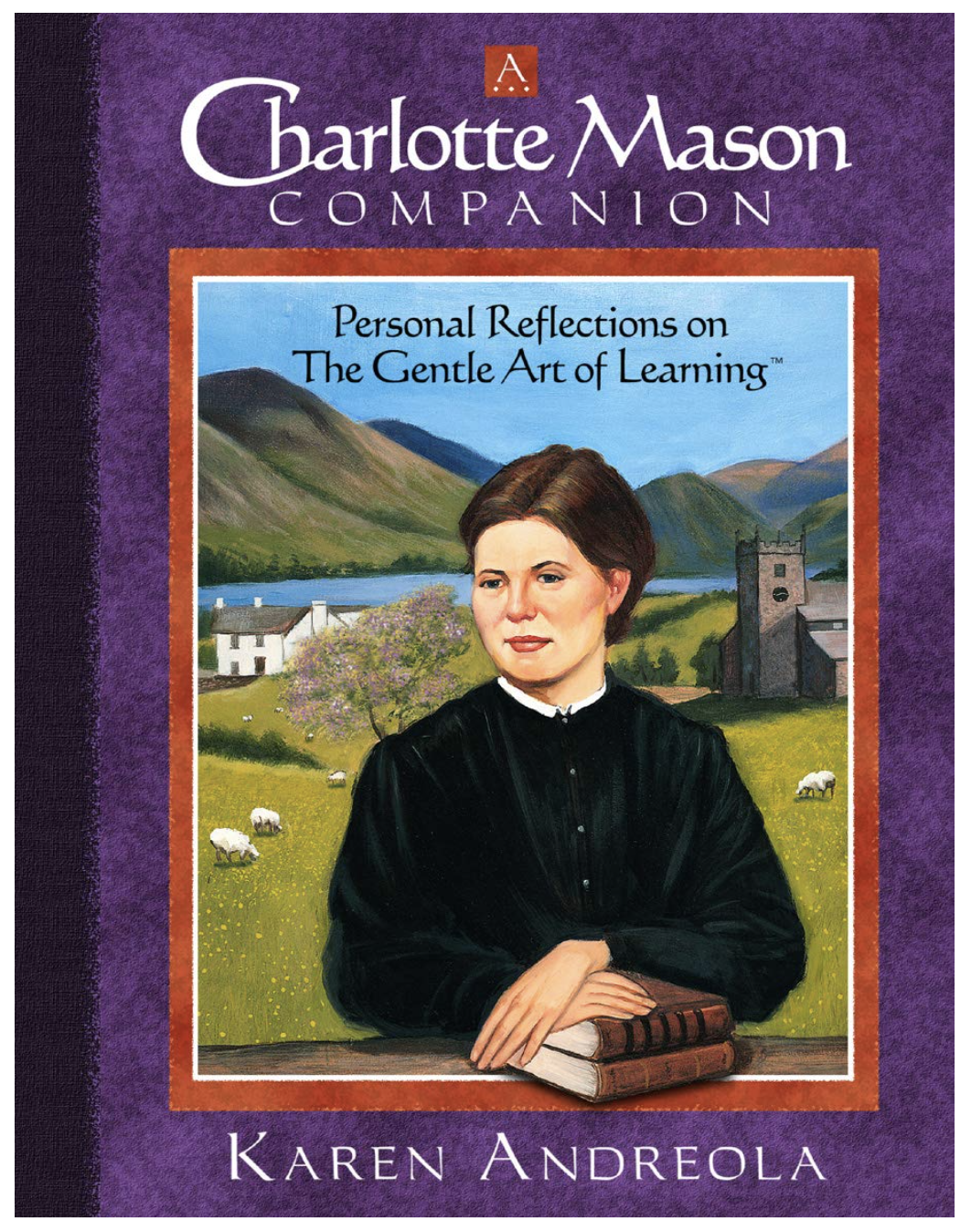
Recommended Reading
The Original Homeschool Series
Charlotte Mason's foundational writings on education: essential reading for any family drawn to this philosophy. Clear, compelling, and surprisingly modern in its insight into how children learn and grow.
View on Amazon →As an Amazon Associate, Living Pages Curriculum earns from qualifying purchases.
Ready to Begin?
Build Your First Curriculum
Living Pages Curriculum generates complete Charlotte Mason literature studies for your family: tailored by book, grade level, and duration. Narration prompts, living ideas, nature connections, and more.
Try the Curriculum BuilderLiving Pages Curriculum is inspired by the educational philosophy of Charlotte Mason. All curriculum content is generated with the assistance of Anthropic Claude AI and should be reviewed by families before use.